Connect people with African knowledge.
Advance understanding of African history and living heritage through careful research, community participation, and accessible educational experiences.
Explore the histories that shape us.
Encounter the heritage that lives on.
We are building a space where historical scholarship and community knowledge meet, connecting Africa’s past with the lives and possibilities of its present.
Founded by educator and entrepreneur Tarsha Lewis, the Institute for African History and Heritage is an emerging institute dedicated to African history and living heritage. Our purpose is to develop thoughtful learning experiences, educational resources, and relationships with historians and heritage custodians.
Ghana is our starting point. Every community has its own histories, languages, and perspectives; our approach makes room for that specificity.
Advance understanding of African history and living heritage through careful research, community participation, and accessible educational experiences.
A connected community of learners who engage thoughtfully with Africa’s histories, value its cultural diversity, and carry that understanding into their classrooms, communities, and lives.
Bring sources and perspectives together, learn with people and places, and turn inquiry into meaningful reflection and practical educational work.
Explore our principles ↗Meet the founder and explore how scholarly and community participation will help shape the institute’s work.
Educator & entrepreneur
Connecting historical inquiry with meaningful learning, in Ghana and across the diaspora.
Tarsha Lewis brings more than twenty years of experience in education to the development of the Institute for African History and Heritage. Her teaching background includes English and health education across school levels.
She holds a B.S. in Interdisciplinary Studies with an English focus from Virginia Union University. Through The Real Return, she is developing connections between preparation, travel, and cultural learning.
Explore her intellectual foundations ↗The founder leads the institute’s development. Additional roles and responsibilities will be published as appointments are confirmed.
An advisory structure is in development to bring historical review, educational expertise, and community perspectives into program design.
We welcome conversations with people whose research, teaching, cultural practice, and community responsibilities can contribute to thoughtful learning.
Contribute subject expertise, historical review, source guidance, and research-informed teaching.
Help translate inquiry into learning activities, guided discussion, and useful educational outcomes.
Shape how local knowledge and cultural practices are shared, attributed, recorded, and protected.
Contributor profiles will be published following agreement to participate and approval of profile details. No academic or community appointments are being announced here.
Explore contributing to IAHH ↗Explore the institute’s developing fields and the questions that connect history, living heritage, and equity.
We believe the people and communities who carry African and diaspora knowledge should have a voice in how it is preserved, shared, and passed forward.
We hope to begin by exploring the life and scientific work of Michael Abugre Abitey, in loving memory, and the knowledge he shared with his family and community.
Family members and collaborators will help identify records, stories, and materials they wish to preserve. Details and sources will be confirmed before any collection is presented publicly.
We seek informed permission, appropriate credit and compensation, and clear agreements about access and copies for contributors. Families and communities may choose to keep knowledge private.
As this work develops, educators, researchers, and students may help carry approved stories and knowledge forward through learning and conversation.
Start a conversation ↗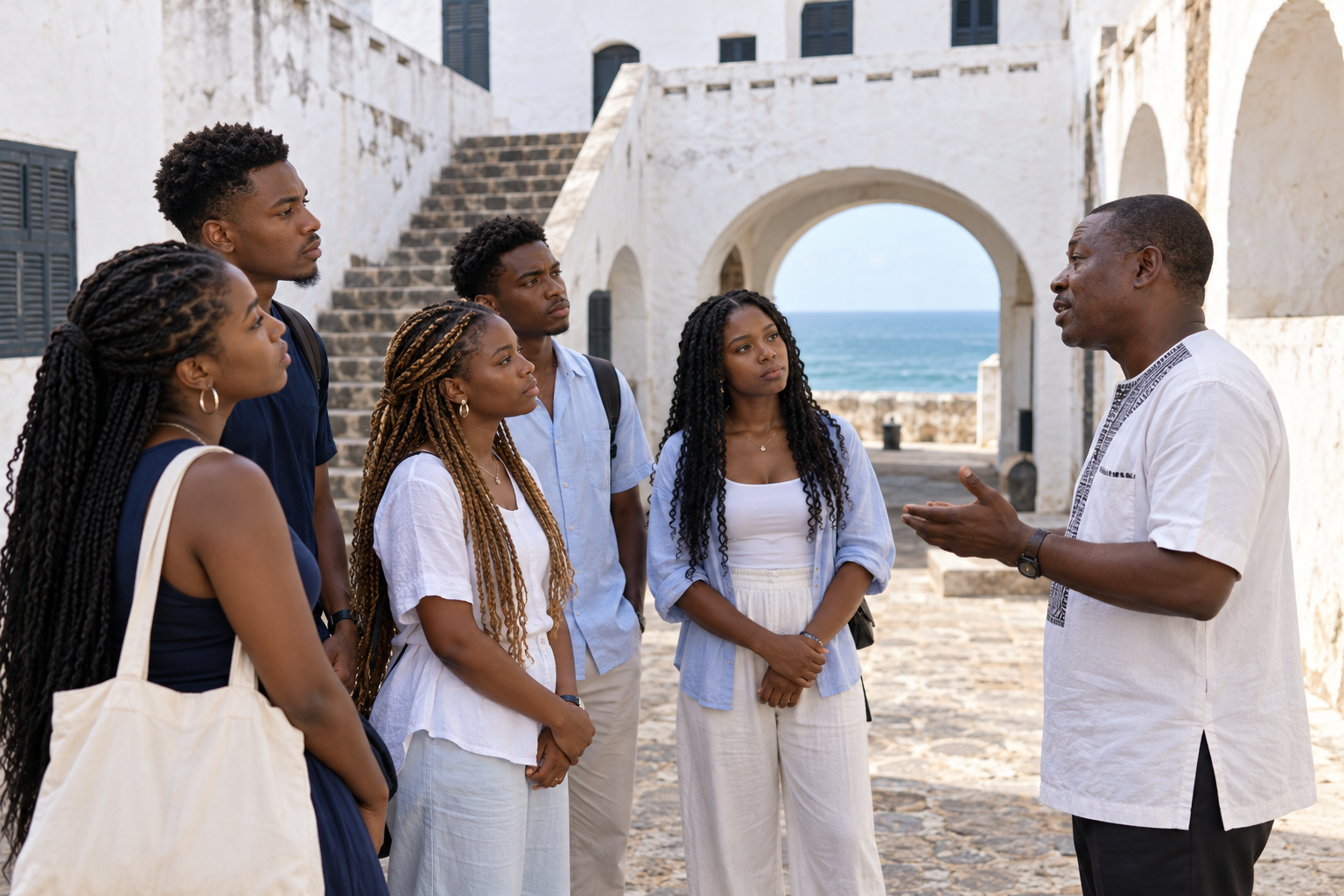
Explore at home, encounter heritage in place, and turn what you learn into something you can share. The pathway is being developed with educators and community contributors.
Accessible introductions, source guides, and public conversations to help you find a question worth exploring.
Guided learning that brings readings, historical evidence, and different perspectives into conversation.
Ghana field experiences designed around a learning purpose, with local voices and time for reflection.
A classroom lesson, source-based essay, reflective project, or permission-based contribution that extends the learning.
Our proposed formats connect public learning, deeper study, and encounters with living heritage. Dates, facilitators, fees, and places will be published when confirmed.
Lectures and moderated exchanges connecting African history, scholarship, and contemporary questions.
Express interest ↗Short learning sequences built around a question, a source set, a discussion, and a practical outcome.
Help shape a studio ↗Read scholarship and literature together, with context, careful questions, and room for different perspectives.
Express interest ↗Connect preparation with site visits and community learning, followed by reflection and a take-home project.
Explore learning journeys ↗Explore how families and communities might document stories and records with consent and control over sharing.
Explore the collection framework ↗A proposed lecture on African knowledge, in loving memory of Michael Abugre Abitey.
Explore the lecture concept ↗Programs in development for educators, students, and organizations. Register your interest to help shape the first learning experiences.
Site-based learning, conversations with local specialists, and reflection that educators can bring back to their classrooms.
Cultural immersion and experiential learning for university students, connecting historical inquiry with contemporary Ghana.
Visit The Return Generation ↗Explore a tailored educational journey for a university, school, association, or community organization.
Explore independence and Pan-Africanism, Asante institutions and resistance, coastal histories of trade and enslavement, and the languages, crafts, and knowledge of living communities.
Accra · Cape Coast & Elmina · Kumasi
Northern Ghana
These are areas for program design, not a confirmed travel schedule. Each visit needs a clear learning objective, a locally informed account, and appropriate permissions.
Discuss a Ghana learning journey ↗Identify sources, compare accounts, and distinguish documented history, oral tradition, and interpretation.
Develop experiences with community custodians and specialists, with consent, attribution, and fair compensation.
Learn through language, foodways, textiles, architecture, and creativity, with attention to their particular communities.
Connect encounters to readings, discussion, and practical learning activities before, during, and after travel.
Family, academia, and a life in education inform the vision behind the institute.
Founder Tarsha Lewis brings her experience as an educator to a project shaped by family influences and a commitment to connecting people with African knowledge.
Tarsha’s father-in-law, remembered here as a source of inspiration for the institute’s attention to knowledge, inquiry, and African heritage.
Professor Emeritus, The Hebrew University of Jerusalem
Areas of scholarship: Ethiopian Studies, African Studies & Comparative Religion. Tarsha’s stepfather has published on Ethiopian history and religious traditions. His academic work forms part of the intellectual inspiration behind the institute.
Family influenceHer influence on Tarsha’s values and educational journey is part of the institute’s founding story.
The two H’s support the I and A in our monogram, expressing the knowledge and living traditions that ground the institute’s work.
A developing framework for cultural documentation, shaped by community participation, permissions, and responsible stewardship.
Interviews and memories, recorded with informed consent and clear agreements about access and use.
Photographs, letters, and records that may illuminate particular lives, places, and experiences.
Documentation of skills and cultural practices, guided by those who hold and share them.
No public archive is available yet. Start a conversation about contributing →
A developing space for essays, interviews, lectures, films, and public discussion.
Envisioned as a conversation across history, science, agriculture, and community knowledge, in loving memory of Michael Abugre Abitey.
Speaker, date, and program arrangements have not yet been announced.
Discuss contributing to the program ↗A starting collection of institutional resources. External resources represent their publishers’ work.
Ghana’s forts and castlesWe are developing a model for sponsored educator and student participation alongside paid programs and group learning.
Express interest in future sponsored places. Funding, eligibility, selection criteria, and covered costs will be published before applications open.
Explore a group program for your school, university, association, or community, with a defined learning purpose and agreed costs.
Start a conversation about supporting participation, learning materials, or fairly compensated community contributions.
Sponsored places are not currently guaranteed. This website does not collect donations or payments.
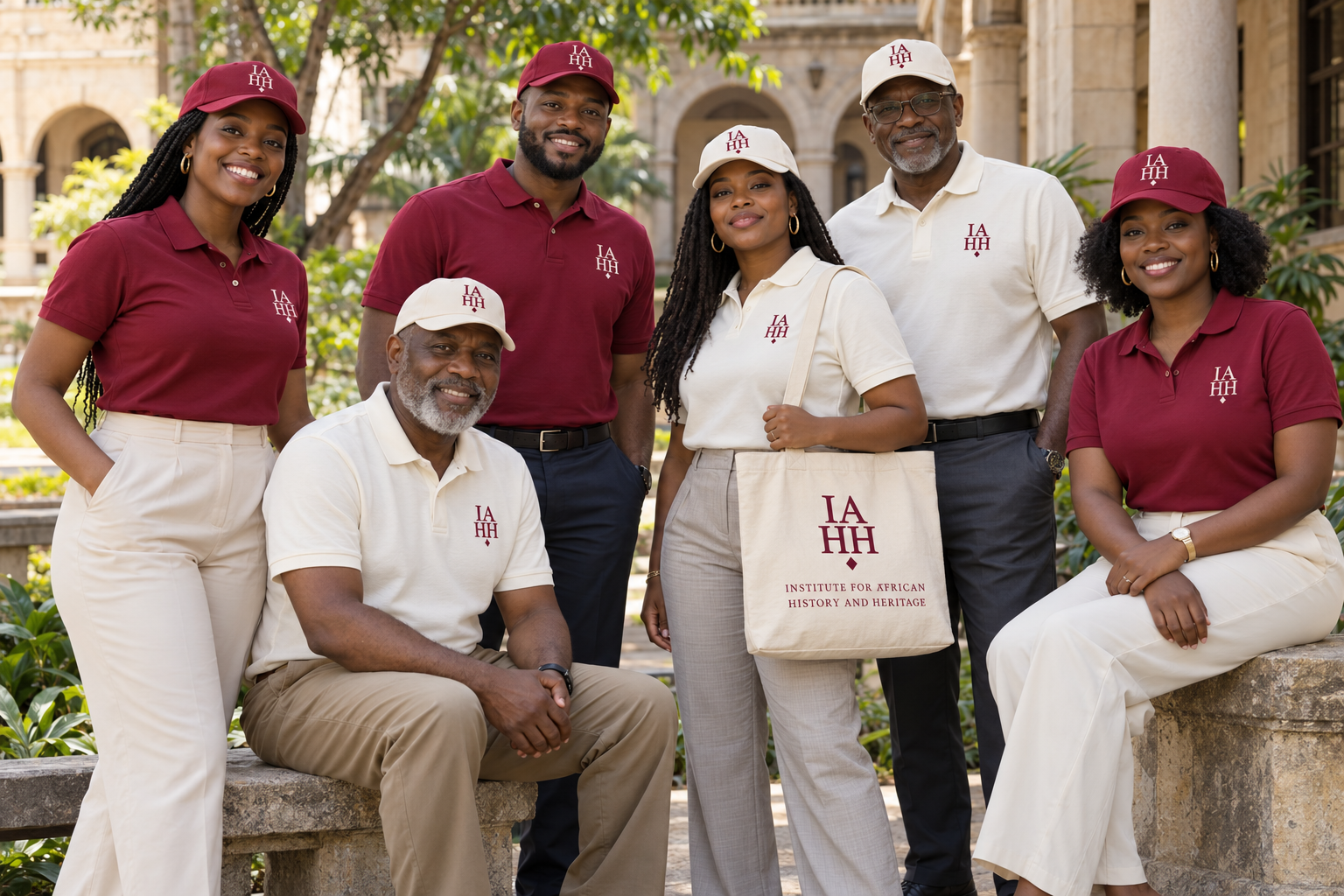
Educators, scholars, heritage custodians, and curious learners all have a place in the conversation.
Find your way to get involved ↗Illustrative merchandise campaignWe welcome interest from educators, historians, university representatives, community custodians, and prospective learning groups.
The institute develops the educational vision. The Real Return coordinates travel experiences, and The Real Return Academy supports preparation and continued learning.
Connect through The Real Return ↗